How Harvest Blue implements water solutions — from research to lasting change
Research & community planning (step 1)
We begin with participatory mapping and simple hydrological checks: local rainfall patterns, roof catchment suitability, existing groundwater depths and community water use. These surveys ensure interventions are context-appropriate and cost-effective. Technical design emphasizes low-maintenance filters, safe storage, and recharge where possible.
Design & materials (step 2)
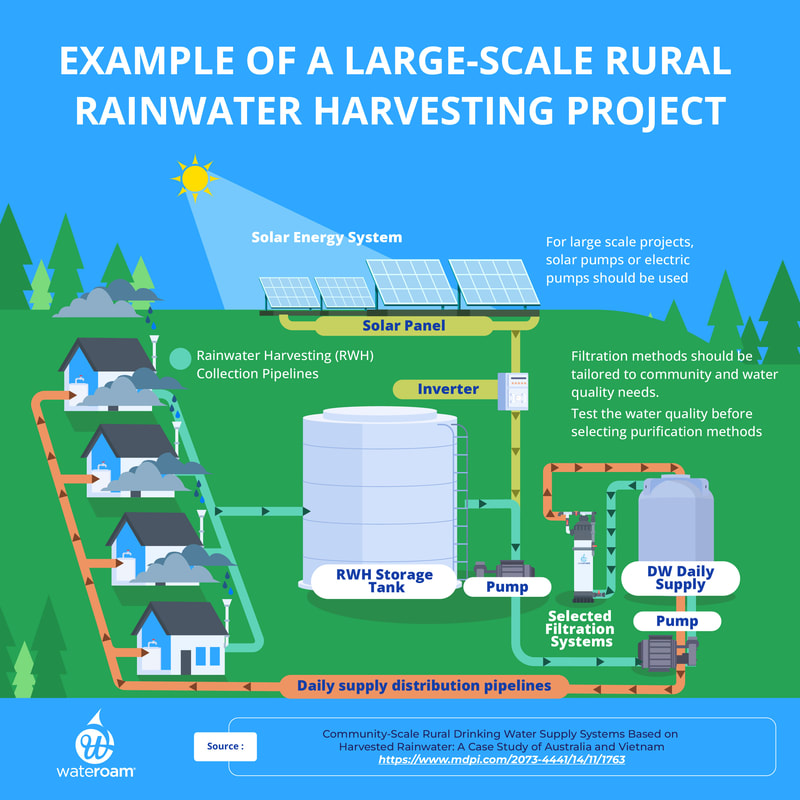
Our engineers and technicians design rooftop collection, first-flush diverters, settling chambers and storage tanks. For schools and community centers we prioritize robust, vandal-resistant tanks and overflow management. Materials are locally sourced where feasible so repairs and replacements remain affordable and local.
Implementation & training (step 3)
Construction is community-led: locals are trained to build and maintain systems, and school pupils take part in simple hands-on workshops. Training covers safe water handling, basic filter cleaning, hygiene and toilet maintenance — increasing ownership and long-term use.
Monitoring & adaptive improvement (step 4)
After installation we run periodic checks and hygiene refreshers — measuring storage levels, water quality (basic turbidity / taste checks), and behavioral uptake. Lessons learned are shared across project sites to replicate what works and adapt what does not.
These four steps aim to create resilient local systems — not just hardware, but social processes that maintain clean water and safe sanitation over time.